
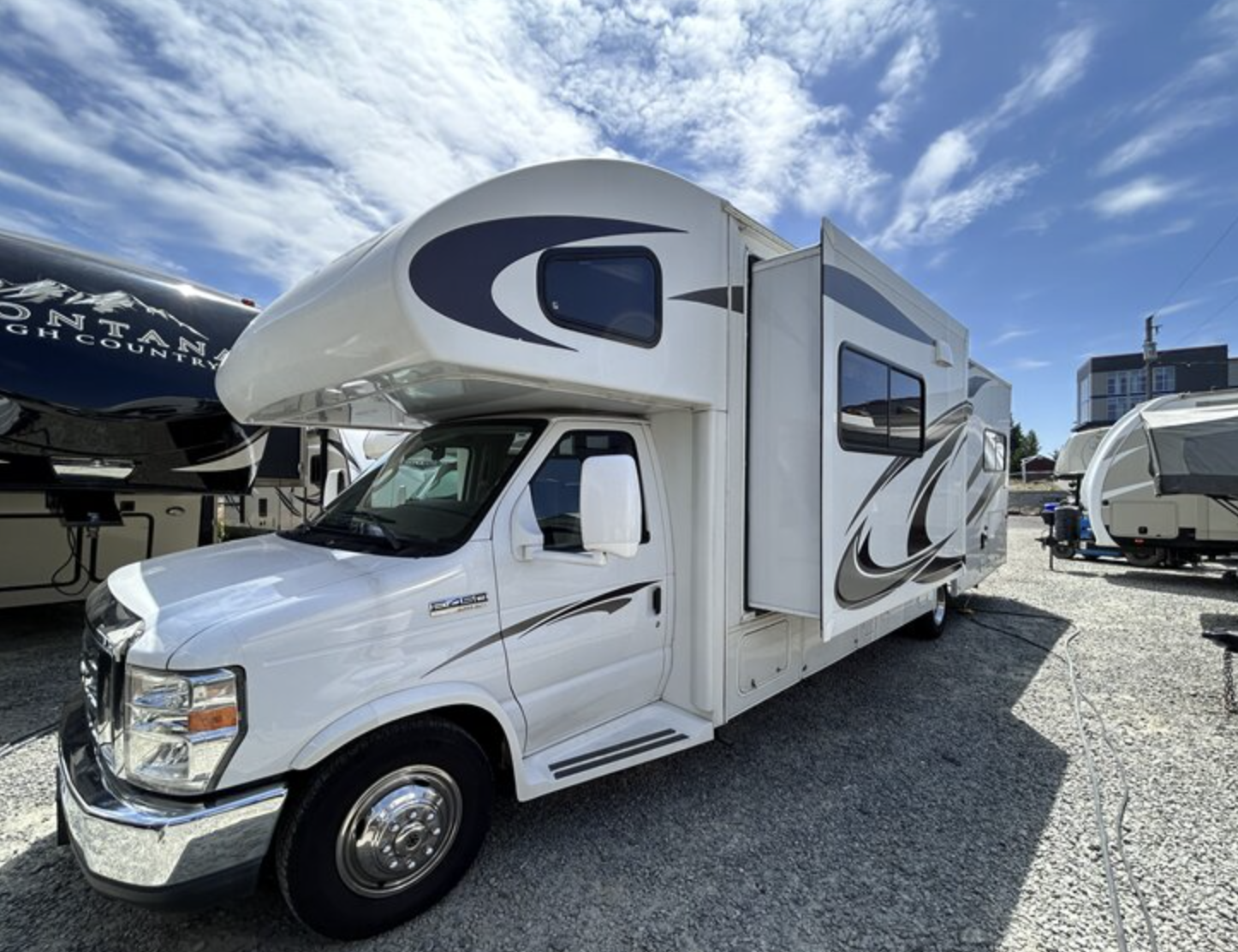
If you live in Portland, you know winter isn’t just a season—it’s a marathon of rain, wind, and damp air that seems to sneak into everything. While our evergreens can handle it, your RV can’t—at least not without proper winter storage prep.
Whether your RV is parked at home in Southeast Portland, stored near St. Johns, or sitting in a covered lot outside the city, how you prepare it now determines how ready (and problem-free) it will be when spring finally arrives.
At Adventure Trading RV, we help Portland RV owners protect their rigs each winter so they can hit the road the moment the sun returns. Here’s your complete guide to winter RV storage—written specifically with Portland’s climate in mind.

Why Winterizing Matters More in Portland
Constant Moisture = Hidden Damage
Our city’s signature drizzle may feel gentle, but over months, it can:
- Sneak into roof seams
- Cause mold or mildew around windows
- Saturate RV awnings and slide seals
- Create condensation inside storage compartments
Temperature Swings
Portland doesn’t freeze as often as Bend or Eastern Oregon—but it freezes enough. Just a couple nights below 32°F can crack water lines if you haven’t drained your system properly.
Urban Storage Challenges
Many Portland owners keep their RV:
- In narrow driveways
- In alley-access lots
- Under trees (a big risk for roof debris and moss)
All of this makes proper winter prep critical.

Step 1: Drain and Winterize the Water System
This is the biggest must-do for Portland RV owners storing their rig through December–March.
- Drain all tanks completely
- Blow out water lines OR fill them with RV antifreeze (never household antifreeze)
- Empty the water heater
- Clear low-point drains
If you skip this, Portland’s occasional freeze can turn a forgotten water line into a cracked plumbing repair bill.

Step 2: Seal Against Rain and Wind
Before your RV spends four months battling the Portland drizzle, inspect:
- Roof seams
- Window seals
- Slide-out gaskets
- Vent covers
- Any previous patchwork
Touch up seals or have them professionally redone if they look cracked or soft. This is one of the top issues we spot when customers bring in trade-ins through our Sell My RV page.
Water damage tanks resale value faster than anything else.

Step 3: Deep Clean Before Storing
A clean RV stores better—and safely.
- Remove all food
- Vacuum floors and upholstery
- Wipe down surfaces with anti-mildew cleaners
- Leave cabinets open for airflow
Portland’s moisture makes RV interiors a hotspot for mold if they’re dirty or sealed tight.
Step 4: Protect Against Portland’s Winter Elements
Use a Breathable Cover
Never use a tarp.
Use a cover designed specifically for RVs that:
- Repels rain
- Allows ventilation
- Fits securely enough to resist winter gusts
Mind the Tires
Cold weather + long-term parking = flat spots.
- Raise your tire pressure slightly before storage
- Consider parking on boards rather than cold pavement
Battery Care
Portland’s damp, chilly air is hard on batteries.
- Disconnect them
- Or use a maintenance charger
- Check electrolyte levels if applicable

Step 5: Don’t Forget the Portland-Specific Hazards
Moss Growth
Every Portlander knows moss is patient and persistent. Keep your roof clean before storage or it will grow into seams and trim.
Branches and Debris
If you store your RV under trees anywhere in the city—especially older neighborhoods like Sellwood or Laurelhurst—expect winter debris. A cover helps, but clearing the area around your storage spot is even better.
Step 6: Choose the Right Storage Spot
In Portland, RV owners typically choose between:
At-home storage:
Pro: Free, convenient
Con: Exposure to rain, tree debris, theft risk
Outdoor paid storage:
Pro: Large spaces, secure
Con: Still exposed to moisture
Covered storage:
Pro: Best protection, least moss growth
Con: Harder to find during winter, pricier
Even if you use paid storage, the steps above still matter.
Step 7: Plan for Spring Now (Yes, Really)
If you want upgrades, repairs, or a trade-in next year, December is the best time to schedule them. By March, every Portland RV owner will be calling at once.
Get ahead by:
- Browsing our inventory for pre-owned RVs
- Using our loan calculator to plan for spring
- Starting a trade-in or consignment evaluation now
If your RV is older or needs repairs you don’t want to invest in before winter, consider listing it through our consignment program. Letting us sell it during the quiet winter months means buyers start seeing it before spring rush hits.
Portland RV Owners: Don’t Store Without a Plan
Portland winters are wet, windy, and rough on RVs—but with the right preparation, spring can be as simple as unlocking the door and starting the engine.
Whether you’re storing, upgrading, or selling, Adventure Trading RV is here to help you protect your investment and stay road-ready for 2026.